
Franklin County Court Docket Searches
Start a Franklin County court docket search at the North Carolina eCourts Portal. The county has run on the Odyssey eCourts system since April 29, 2024. Portal is view-only. It shows public case information, but it is not a filing service. It is also not a source of certified court records. A search works best with the county, a full case number, or a party name. Type the name the way the court spells it.
Use a Portal result to spot the case, the division, and any listed activity. Then check anything time-sensitive against the notice and the clerk. Results can fall short. Coverage gaps, record restrictions, or a spelling and format mismatch can all hide a case. So treat a missing result carefully. It proves nothing on its own. It should never be the basis for a conclusion about a Franklin County case.
- Open Portal and select Smart Search for a Franklin County case search.
- Enter a full record number, or enter a name as Last, First Middle Suffix.
- Use the result to open the public Case Summary or Register of Actions.
- Use Search Hearings when the question is a Franklin County court date or setting.
- Ask the Franklin County Clerk of Superior Court for a filed document, certification, or a record that is not available online.
Franklin County Portal Search Paths
The Portal splits Franklin County work into separate paths rather than one big docket search. Smart Search takes a record number or a name. Search Hearings covers a scheduled setting. Make Payments is its own function, and NC Judgment Search serves as a reference index. Basic search caps out at 200 results. A broad Franklin County name query may call for Advanced Search filters. The official Portal guide spells out every criterion you can filter by. The Judicial Branch data and statistics source covers aggregate reporting. That reporting is separate from a live Franklin County case lookup.
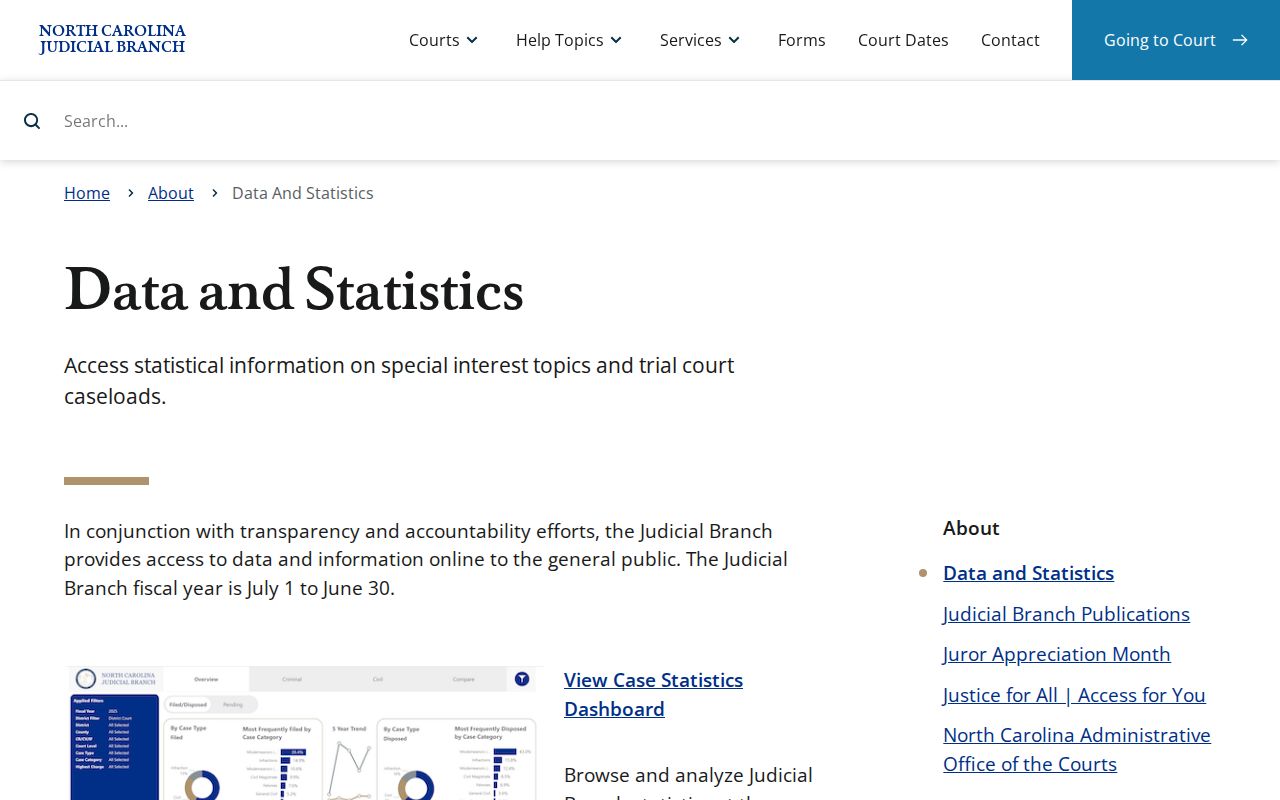
County activity reports summarize past court activity by reporting period. They cannot replace a Portal result or a clerk confirmation on one Franklin County case.
| Portal function | Franklin County use | Important limit |
|---|---|---|
| Smart Search | Find public cases by name or record number | Broad searches can reach the 200-result display limit |
| Search Hearings | Check a listed setting by case, party, courtroom, or date range | A notice or order remains case-specific |
| NC Judgment Search | Find reference index fields | Confirm current details with the clerk or Register of Actions |
Court Dockets: What They Show
A Portal search lands on a Case Summary, also called a Register of Actions. Think of it as a public summary of docket entries drawn from the clerk's record. Case identification can appear there. So can parties, case type, status, hearings, financial fields when present, and public activity. Still, it is not the official court file. Downloading a view makes nothing certified.
Franklin County civil, domestic, probate, and mental-health cases may display a Cause of Action section. It appears only when the underlying record has one. Hearing and financial sections show up only where data exists. Read any status next to its date and the entries that follow. A label like Pending or Disposed is just interface vocabulary. It does not fully explain where a Franklin County case stands.
| Record number | The precise Portal identifier; an exact public number is the strongest search route. |
|---|---|
| Case type | A category such as Criminal, Infraction, Civil General, Estate, or Civil Magistrate. |
| Case status | A current Portal label that must be read with the record activity. |
| Hearing data | Scheduled information when it is available for public access. |
| Register of Actions | A public docket-entry summary, not the clerk’s official court record. |
Franklin County Docket Confirmation
A Franklin County online result can point you to the right case. When you need proof, the route changes. The Franklin County Clerk of Superior Court holds the court files, dockets, and indexes. These cover Superior and District Court matters. Clerks statewide offer public self-service terminals. Paper files stay open to view in the county where the case lives. So ask the Franklin County clerk where the terminal or file counter sits rather than guessing.
The Judicial Branch record instructions draw real distinctions. A docket, an ordinary copy, a certified copy, a transcript, and a releasable audio request are all different asks. Court reporters set transcript charges on their own. Tell the clerk the exact item you need. Give the case number if you have it. Then ask whether certification or some other route applies.
That same official record-access page spells out what the Judicial Branch itself provides. It also explains how each record type is obtained.
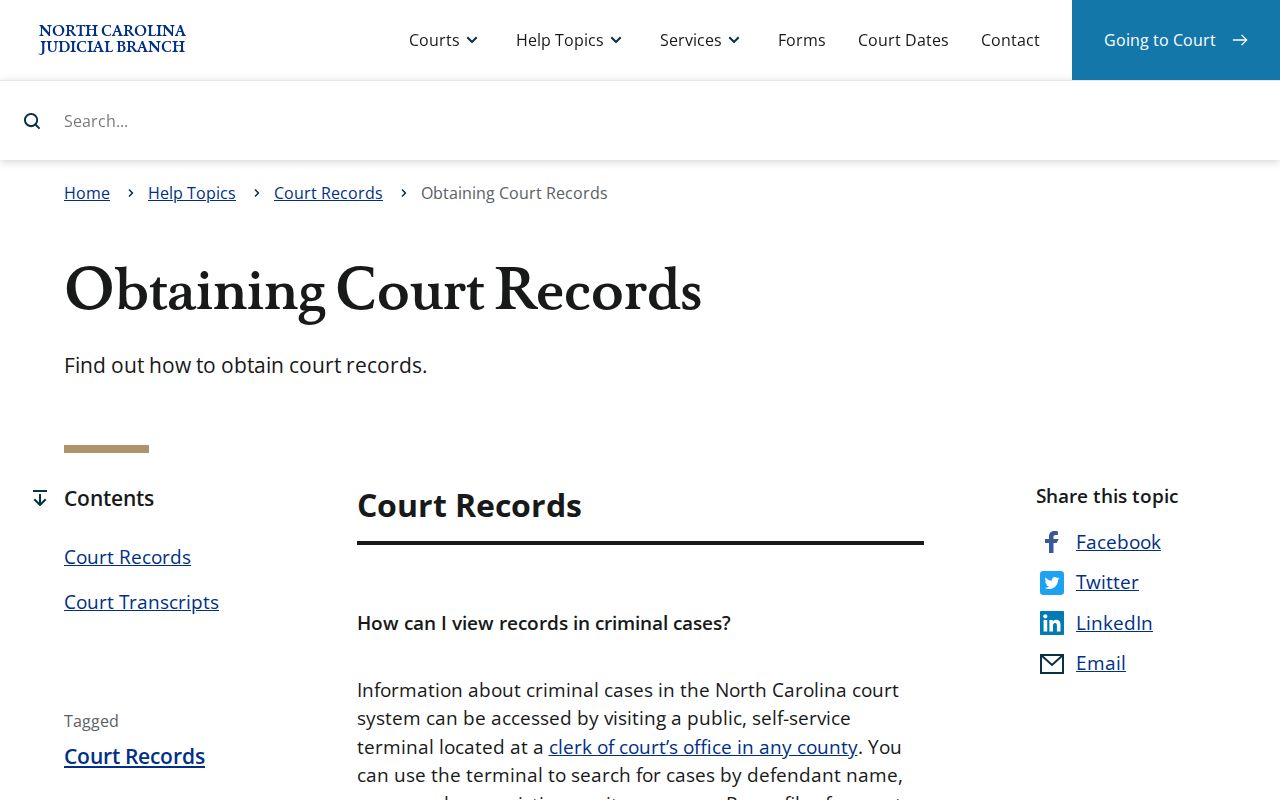
For Franklin County case documents, the clerk is the office to ask. The statewide NCAOC public-record request process covers administrative records only, not an individual court file.
Franklin County Courts and Their Dockets
Franklin County sits inside North Carolina's unified state court system. Superior Court is the general-jurisdiction trial division. It hears felony cases, civil claims above $25,000, and certain District Court appeals. District Court takes misdemeanors, infractions, lower-value civil matters, domestic and family cases, and juvenile matters. Magistrates handle small claims within the statutory limit along with other limited judicial functions.
One Franklin County clerk serves as the practical records desk across all these state-court paths. No city police agency or town office keeps a separate municipal court docket. None of the county's towns has one. Let the case type, the county, and the court notice pick the route.
| Franklin County court path | Typical public case types | Records route |
|---|---|---|
| Superior Court | Felonies, higher-value civil cases, and qualifying appeals | Portal public information and clerk-held file |
| District Court | Misdemeanors, infractions, family matters, and lower-value civil cases | Portal, calendars, and clerk-held file |
| Magistrate matters | Limited initial criminal functions and small claims | Clerk and case-specific court route |
Franklin County eCourts Transition
Franklin County joined eCourts on April 29, 2024. That date tied the county to Odyssey, eCourts File & Serve, and the public Portal. It also explains a split you will notice. Recent Franklin County public case information has a Portal route. Older, paper, restricted, sealed, expunged, or non-Odyssey questions may need a different official source.
Portal and eCourts File & Serve do different jobs. The Portal is the public layer for searching and related functions. File & Serve is the electronic filing route for people and attorneys with the applicable account. Finding a Franklin County public case grants no filing access. Nor does ordinary public lookup require a Portal account.
The Franklin County location page from the state courts lists the county's services, contacts, and current operating details. Treat it as the official starting point.
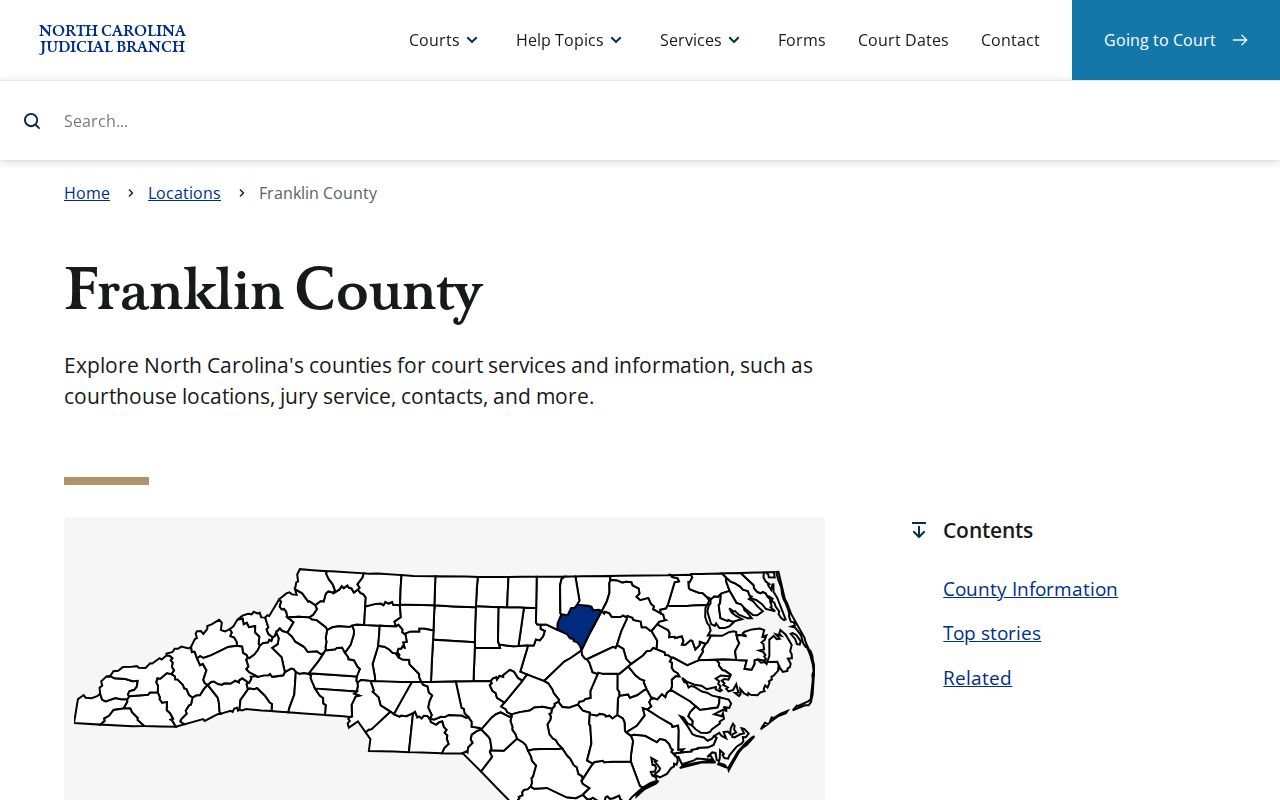
The source anchors the county's state-court location, and Portal supplies the electronic-era Franklin County search layer.
Court Dates and Settings in Franklin County
For a Franklin County court date, start with the case notice or order. It beats every other source. After that, turn to Portal Search Hearings. Then try the county calendar or schedule page, and the clerk. Each tool answers a different question. A case search finds a public case. A hearing search shows what is scheduled. A calendar lays out a whole session, but none of them replaces a case-specific notice.
The portal's hearing search lets you query by case number, party name, business name, attorney, attorney bar number, judicial officer, or courtroom. Filters cover location, hearing type, and date range. Select Franklin County when you can. A blank result may mean the wrong date range. It may mean a restriction, or simply no hearing set. For a fuller walkthrough of current settings, see the Franklin County court schedule.
Franklin County Calendar Checks
Franklin County posts local administrative schedules with links to criminal and civil calendars. The statewide Court Dates service offers another official route to a docket entry. The locally posted civil plan adds background on administrative weeks and motion calendars. It also explains how trial calendars get published. Still, its district label and date carry weight. The current notice and schedule control any present Franklin County setting.
The criminal case-management material describes an older printed-calendar process. The district attorney kept it for Superior Court. Treat that as history, not a promise that a given Franklin County case is set on a fixed timetable. Weather or emergency closures are different. The Judicial Branch says rescheduling information is mailed when applicable. The clerk can confirm the result.
Check before travel. A Franklin County notice or order controls the individual case. Confirm the date, location, and any closure-related change with current official court sources.
Docket Access Under North Carolina Law
Public access to a Franklin County court docket comes with conditions. Under G.S. 7A-109, the clerk must keep court files, dockets, and indexes open for public inspection during regular hours unless law blocks access. G.S. 132-6 adds North Carolina's general rule for prompt inspection and copies. That rule covers every public record in the state.
Key rules for Franklin County records:
G.S. 7A-109 keeps clerk-held files, dockets, and indexes subject to public-inspection limits.
G.S. 132-6 addresses timely inspection and copying of public records.
G.S. 1-72.1 provides a civil procedure for public-access and sealing issues.
G.S. 7A-276.1 addresses availability of public court records.
Franklin County Docket Access Limits
A public Franklin County docket search does not promise that every record will show up. Not every document will appear either. The Portal guide names several categories that can require elevated access or stay offline. Those include sealed court records and unreturned criminal warrants. Juvenile matters, protective-order records, non-domestic restraining orders, domestic-violence protective orders, and confidential special proceedings round out the list.
For Franklin County expunction questions, use the court's official Expunctions resources. A missing result can mean a format issue or historic material. It can also mean a nonpublic case, or no match at all. Ask the clerk about the public file or an authorized route. Do that before assuming what a blank or restricted screen proves.
How the Clerk Keeps Docket Records
The Franklin County Clerk of Superior Court keeps the local court files, dockets, and indexes. The courthouse and related court services sit in Louisburg. The current Judicial Branch directory is the best place for live office details, so check it before you go. When you contact the clerk, bring a case number, the county, the case type, and the party name in the court's exact order. State your request clearly too: inspection, ordinary copy, certified copy, exemplification, file-location confirmation, transcript, or audio availability.
Franklin County Clerk of Superior Court
102 S. Main Street
Louisburg, NC 27549
(919) 497-4200
Franklin County's online route and clerk route work hand in hand. A Portal summary helps you find a case, while the clerk handles file-level confirmation and certifications.
Franklin County Copy Fee Basics
Franklin County's copy fees rest on the statewide clerk fee schedule in G.S. 7A-308. That statute lists charges for common clerk services. One request, though, can involve several items at once. Ask the clerk to quote the record, preparation, and certification you need before treating any listed figure as the total.
| Clerk service | Statutory baseline |
|---|---|
| First page preparation | $2 |
| Each additional page | $0.25 |
| Certificate under seal | $3 |
| Exemplification | $10 |
| Criminal-record search | $25 |
| Motion to access a court record | $30 |
The Census QuickFacts image gives county context only. It says nothing about a Franklin County court docket count or the current court workload.
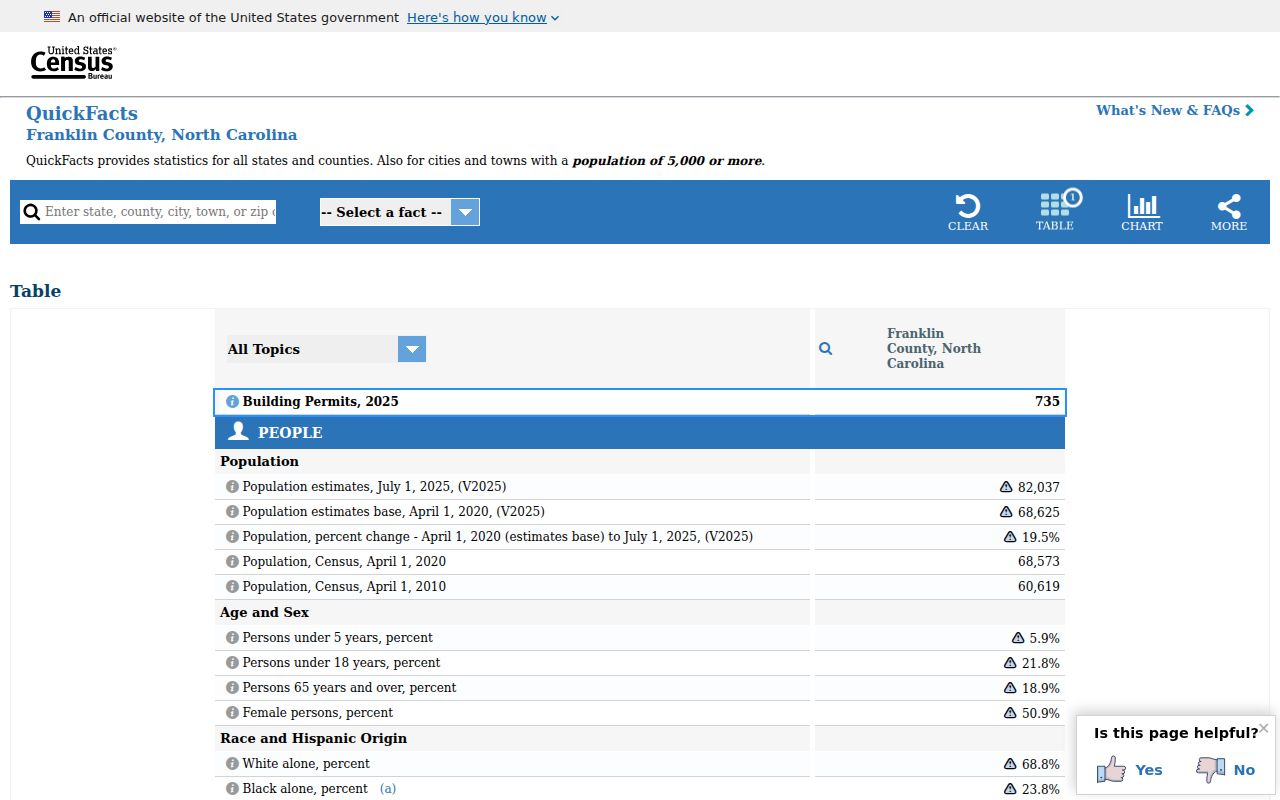
Franklin County's population and geography explain why both online and clerk-counter access matter. Neither one measures case volume.
City-by-City Court Dockets in Franklin County
Louisburg, Franklinton, Youngsville, Bunn, and the Franklin County part of Wake Forest all share the same state-court structure. None of these towns has its own court. North Carolina offers no separate municipal court docket for these towns. A town police page, agency report, or code page is not the Franklin County court file. For any state-court case, follow the county and venue printed on the citation, case number, or notice.
Louisburg Court Records
County-seat court and clerk route; the notice identifies the current building.
Franklinton Court Records
Town agency information is separate from the Franklin County state-court record.
Youngsville Court Records
Use the case venue, Portal, and clerk rather than a town docket.
Bunn Court Records
Town code material is civic context, not a court search or payment system.
Wake Forest Court Records
Confirm venue first because Wake Forest extends beyond Franklin County.
Franklin County Record Boundaries
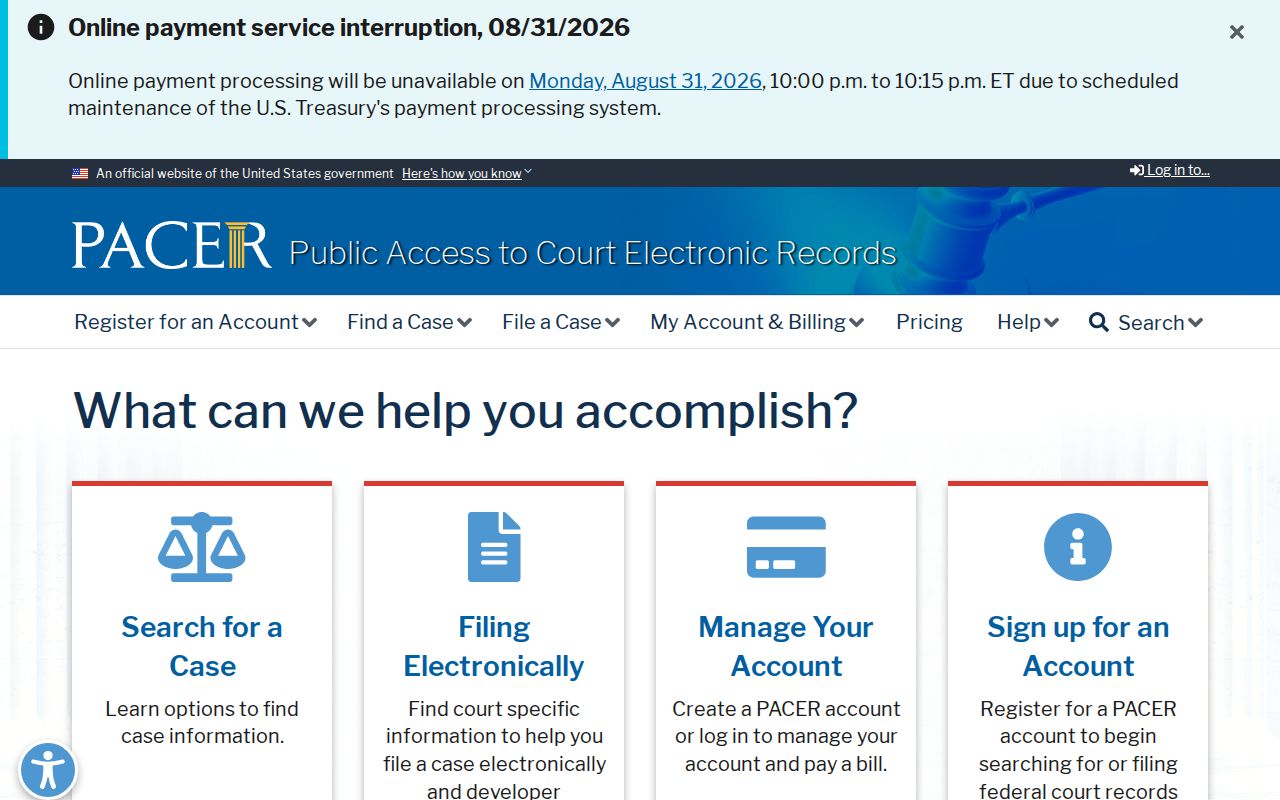
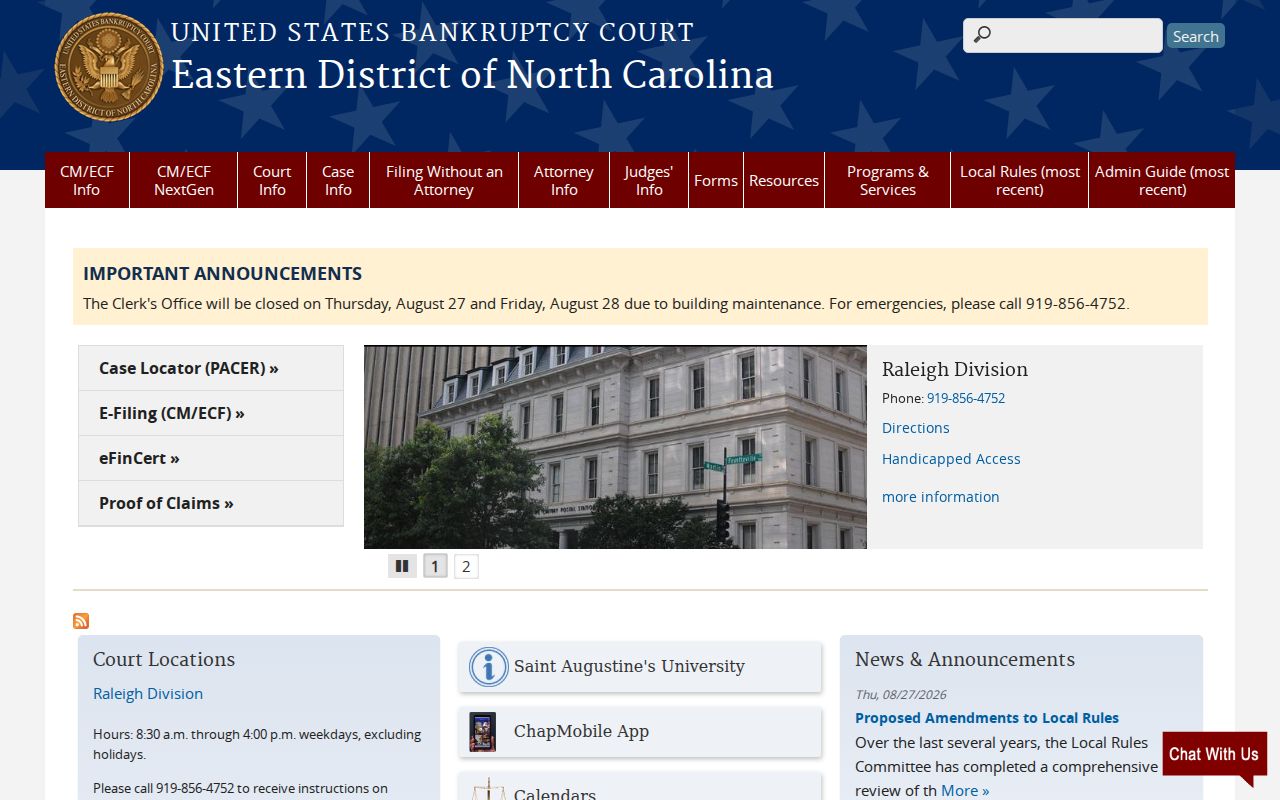
Franklin County state-court records stop at the courthouse door when it comes to federal matters. Federal district-court cases for the area run through the PACER service and the Eastern District of North Carolina's own systems. Bankruptcy belongs to the U.S. Bankruptcy Court for the Eastern District of North Carolina. The PACER page shows that separate federal boundary in full.
A Franklin County traffic court record is not the same as a state DMV driving record. The clerk holds the court file; the DMV keeps its own agency record. Keeping the two systems straight stops one lookup from being mistaken for a complete record of the other.
Franklin County Courthouse Locations
Franklin County court services sit on a two-building Louisburg map. The Franklin County Courthouse stands at 102 S. Main Street. The Hobgood Annex is at 113 S. Main Street. County history puts the clerk's office and a Superior courtroom in the historic courthouse. The Annex holds a District courtroom and part of the clerk's office. For any specific Franklin County hearing, a current notice controls the location. Check it before you head out.
The federal side is a different world entirely. The U.S. Bankruptcy Court site marks that system. It operates apart from Franklin County state court.
Check the official courthouse page for the Franklin County courthouse address, hours, and accessible entrances. It is the best source before any visit. Your court notice names the exact room for your setting, so rely on it rather than the building layout.
Map and Directions to the Franklin County Courthouse
The Clerk of Superior Court's office and a Superior courtroom sit in the historic Franklin County Courthouse on Louisburg's main square, renovated in 2014. The Hobgood Annex a block away at 113 S. Main Street holds a District courtroom and part of the clerk's office. Bring a case number if possible, since a current notice, not building history, controls which of the two buildings a specific hearing uses.
Franklin County Courthouse
102 S. Main Street
Louisburg, NC 27549
(919) 497-4200
Monday through Friday, 8:30 a.m. to 5:00 p.m.
The main courthouse's accessible entrance is on Nash Street; the Annex's accessible entrance is on Main Street. A locally posted electronic-device order restricts certain devices in the courtroom, so confirm current entry rules with the clerk's office before bringing recording or transmitting equipment.