
Franklin County Clerk Record Custody
The Franklin County Clerk of Superior Court keeps the court files, dockets, and indexes for Superior Court and District Court matters. It does so for the whole county. Want a filed document? Need a certified copy? The clerk's office is the counter for all of it. The office also answers when the electronic result leaves a question open. The statewide administrative office does not hold Franklin County filed case documents. A case file stays with the clerk in the county where the case sits. G.S. 7A-109 sets out the clerk's court-file, docket, and index role. It also provides for public inspection during regular hours unless law blocks access.
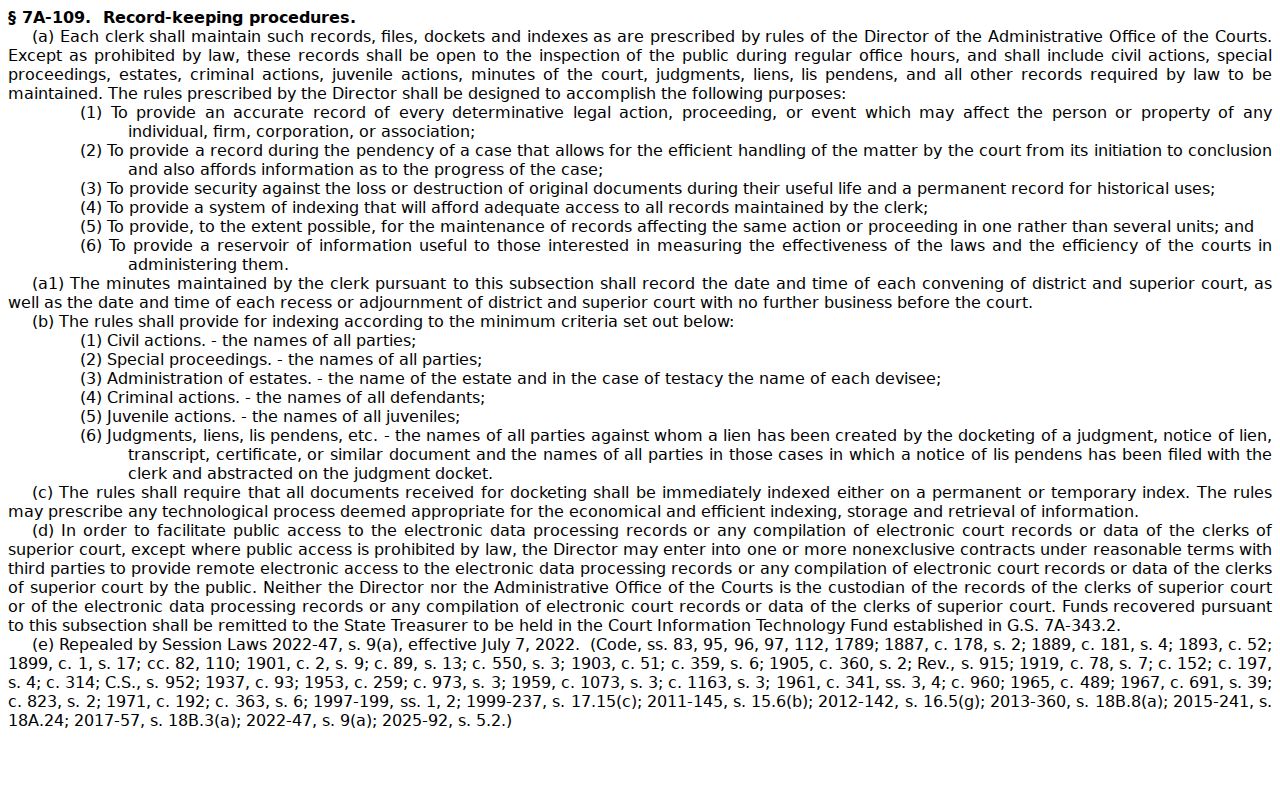
So even when an online case search gives you the first clue, the official request still belongs with the clerk. That is what the statutory custody rule means in practice.
Franklin County Court Record Requests
A good Franklin County record request names the county, the court, the case number if you have one, the party name as the court wrote it, and the exact item wanted. Precision matters here. Inspection, an ordinary copy, a certified copy, and an exemplification are four different products. So are a docket entry, a filed document, a transcript, and available audio. File-location confirmation is its own ask too. Naming the specific Franklin County record keeps several different court products from collapsing into one generic file request.
- Use the public Portal to locate a Franklin County case number or case type when public electronic information is available.
- Contact or visit the Franklin Clerk of Superior Court for a file, terminal, paper-file, copy, certification, or restricted-access question.
- State the exact Franklin County record needed and provide the case number, county, case type, and party name.
- Ask the clerk to confirm availability, the required request method, and the total charge before payment.
- Use a court reporter for a transcript, or ask the clerk about an available releasable audio request.
For official routing, the Franklin County contact directory lists the clerk-office number. The courthouse main clerk directory number is (919) 497-4200. A call can sort out a file route quickly. Still, the clerk alone decides what can be inspected or copied.
Franklin County Online Record Search
The North Carolina eCourts Portal is a view-only public window into Odyssey records for Franklin County. Its Case Summary and Register of Actions pull public docket entries from the clerk's official record. Keep one thing clear. The Portal is not the official court record. It can help you locate a Franklin County case, check public status, and spot a possible hearing, but it issues no clerk certification.
Franklin County went live in eCourts in 2024. That makes Portal central for current electronic-era case information in the county. It is not a complete archive, though. Older paper files, sealed, expunged, restricted, or confidential material can still need a clerk route. Treat the public search as a starting point for Franklin County records access. It does not replace the custodian of the file.
Kinds of Court Records
What a Franklin County court case record looks like depends on the court. It also depends on the case type. Superior Court handles felony criminal cases, larger civil cases, and certain District Court appeals. District Court covers misdemeanors, infractions, family and juvenile matters, and lower-value civil claims. Magistrates hold limited judicial functions. They hear small claims within the statutory limit. Through it all, the Franklin County clerk remains the records route. The case category just shapes the public labels and any access limits.
- Public docket entries and a Portal Case Summary or Register of Actions.
- Filed pleadings, motions, orders, and judgments in a public Franklin County case file.
- Criminal, civil, domestic, estate, guardianship, and special-proceeding records subject to their access rules.
- Clerk-issued ordinary copies, certified copies, and exemplifications when available.
- Separate transcript or releasable-audio routes when those items exist.
Estate and special-proceeding matters run through the clerk too. Their Portal fields and confidentiality limits can differ from an ordinary civil lawsuit. So name the case type in any Franklin County request rather than assuming identical access for every file.
Franklin County Public Terminal Records
The Judicial Branch says each clerk's office offers public self-service terminals. Paper files can be viewed in the county where the case is located. In Franklin County, ask the clerk's office about the public terminal and the file counter. Details like terminal location and printing setup are best confirmed with Franklin County court staff before a visit. That goes for any separate hours too.
State guidance describes terminal searches by case number and defendant name. For criminal matters, victim and witness names work too. The terminal is another access channel when Portal leaves a public-file question open. It does not override a seal or a confidentiality rule. It does not override a clerk instruction on what can be inspected either.
The Franklin County Courthouse sits at 102 S. Main Street in Louisburg. Its official page covers court-building operations, accessibility, and hours.
Court Records: What They Contain
A Franklin County case file runs broader than its Portal summary. What is public depends on the case, the document, and the rules that govern it. In a public matter, the clerk-held file can include filings and orders. Those often explain the concise docket entries. The Register of Actions stays a summary. It never substitutes for the official filing or an authenticated copy.
| Case number | The court identifier used to locate the Franklin County file and Portal summary. |
|---|---|
| Register of Actions | A chronological public docket-entry summary based on the clerk's official record. |
| Pleadings and motions | Filed items that may be available in a public Franklin County court record. |
| Orders and judgments | Filed rulings or judgments when public access is available. |
| Hearing information | Scheduled settings and related information when the underlying record includes it. |
A Portal result can pin down the case before you make a request. The Franklin County docket search route explains how to find a public number or Register of Actions first.
Franklin County Paper File Route
Paper still matters in Franklin County. Some files must be viewed in the county where the case sits. The clerk answers any file-location question. Older Franklin County court records predate the Portal era. A docket search there can come up empty even when the paper file exists. An electronic result may also leave out a document that is public in the paper file. Ask the clerk which inspection route fits the particular court file.
Hearing recordings raise their own questions, apart from transcripts. Court reporters charge their own rates for transcripts. District criminal proceedings are not ordinarily recorded, except in defined situations. For a nonconfidential recording, the state points a requester to the AOC-G-114 route through the clerk. Confidential material needs court permission first.
Note: A Franklin County docket entry, a paper file, a transcript, and a recording are distinct court records. Each may follow a different request path.
Copy Fees and Certification
The clerk-fee baseline sits in G.S. 7A-308. It does not settle the final bill. What a Franklin County requester pays depends on the item, the page count, and whether authentication is required. Keep one thing straight: an online view or a self-printed Portal result is not a clerk certification. So ask the Franklin County Clerk of Superior Court to quote the exact public record request. Do that before treating one fee line as the total cost.
| Franklin County Court Record Item | Statutory Baseline |
|---|---|
| Preparation of the first page of each requested document | $2 |
| Each additional page | $0.25 |
| Certificate under seal | $3 |
| Exemplification | $10 |
| Motion to access a court record | $30 |
The official clerk fee schedule is the source displayed below.
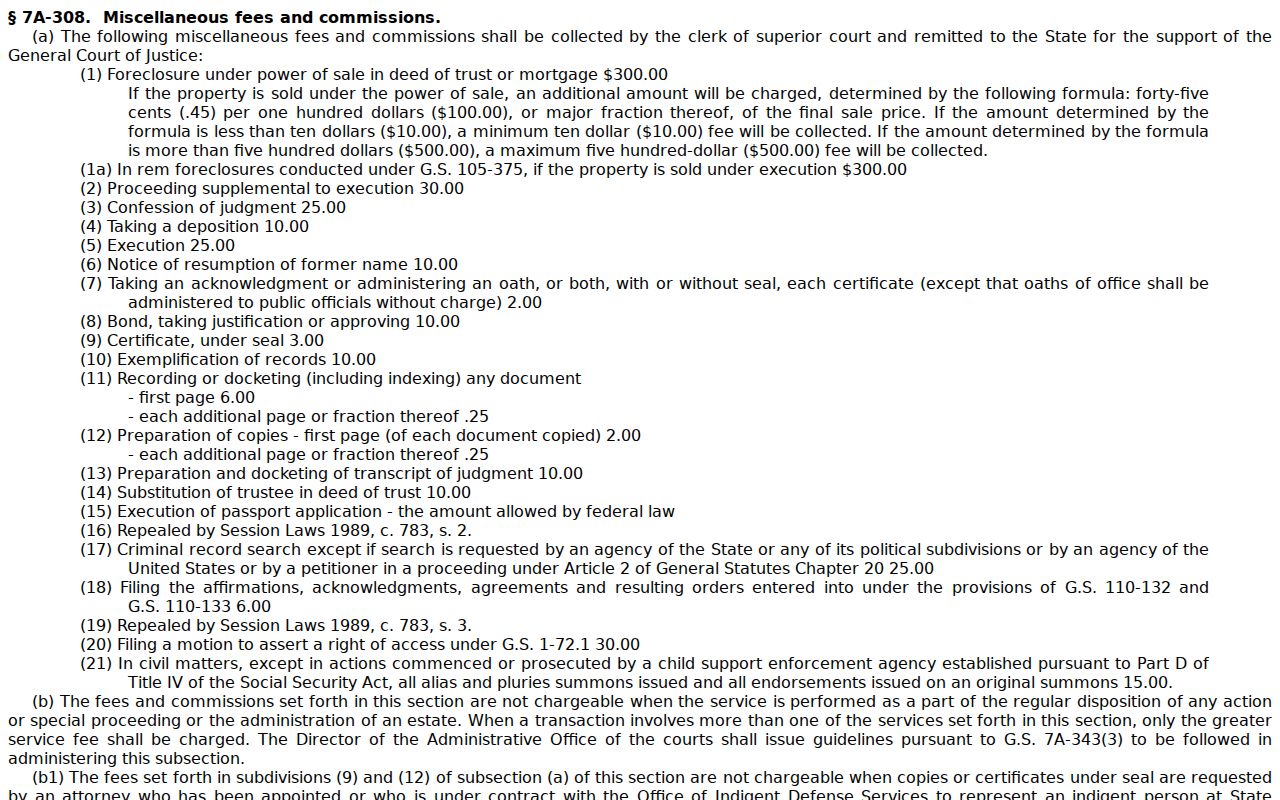
Need a certificate, an exemplification, or another format from a court file? The Franklin County clerk can determine which one is available for that particular file.
Franklin Clerk of Superior Court
Franklin County Courthouse
102 S. Main Street, Louisburg, NC 27549
(919) 497-4200
Franklin County Certified Record Choices
A plain copy is one thing in Franklin County. A certified copy and an exemplification are two more. The clerk decides availability and the right form of authentication. State the document's purpose in the request. Portal can identify a case number and record type. It cannot carry the clerk's authentication, because certification is a Franklin County clerk function.
Access Rules for Court Records
Public access in Franklin County is conditional, never absolute. G.S. 7A-109 provides for public inspection of clerk-maintained files, dockets, and indexes during regular hours, unless some law prohibits it. G.S. 132-6 addresses prompt inspection and copies of public records, including appropriate online availability. Neither rule opens confidential, sealed, juvenile, protective, or other restricted material to anyone who asks.
North Carolina access rules:
G.S. 7A-109 requires clerk maintenance of court files, dockets, and indexes and states the regular-hours public-inspection rule, subject to legal limits.
G.S. 132-6 covers prompt public inspection and copies where access is authorized.
G.S. 1-72.1 provides a civil procedure for public-access and sealing questions.
G.S. 7A-308 lists baseline clerk charges for records, certificates, searches, and access motions.
G.S. 7A-276.1 addresses publication and availability of public court records.
The public inspection and copy statute is the source displayed here.
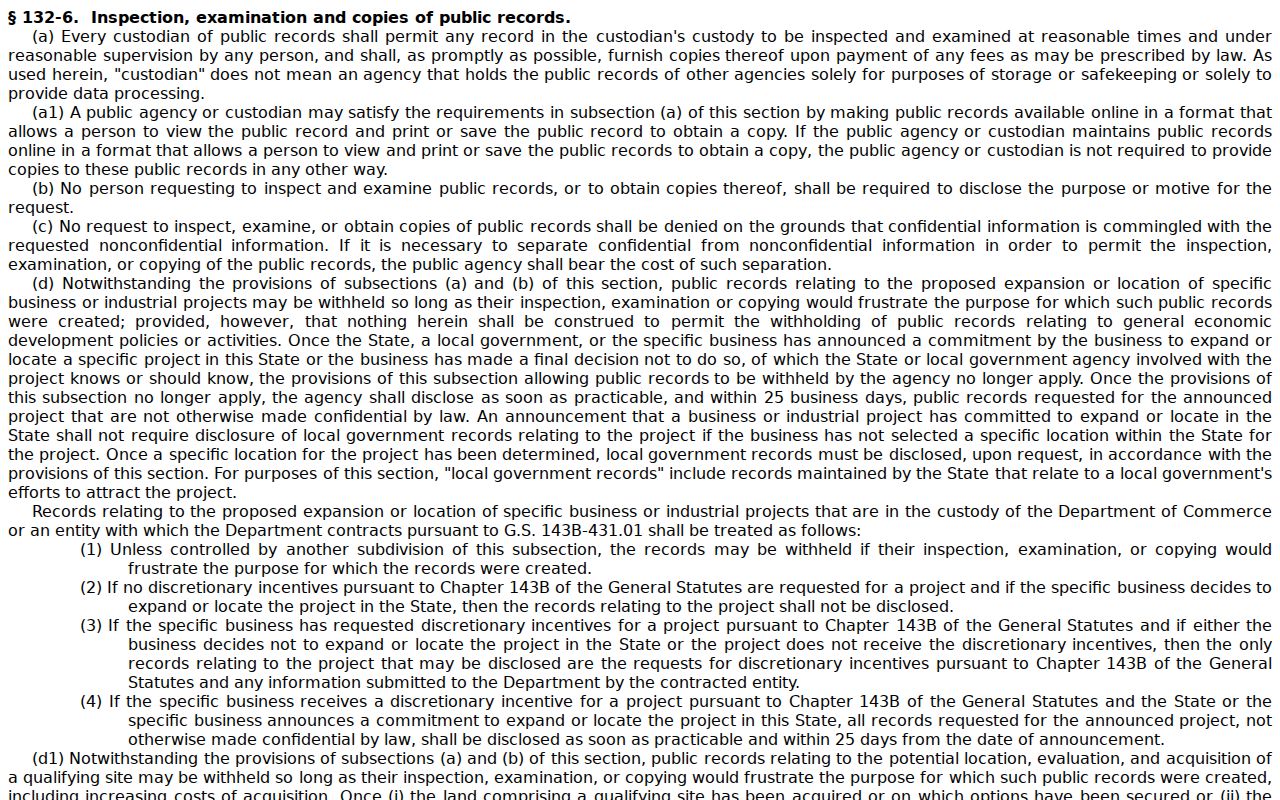
Access in Franklin County turns on the case file, the document, and the statute. Any court order matters too. No clerk route gets around a restriction. A clerk can, though, identify the public route that remains. The court-record availability statute spells out what the General Assembly makes public.
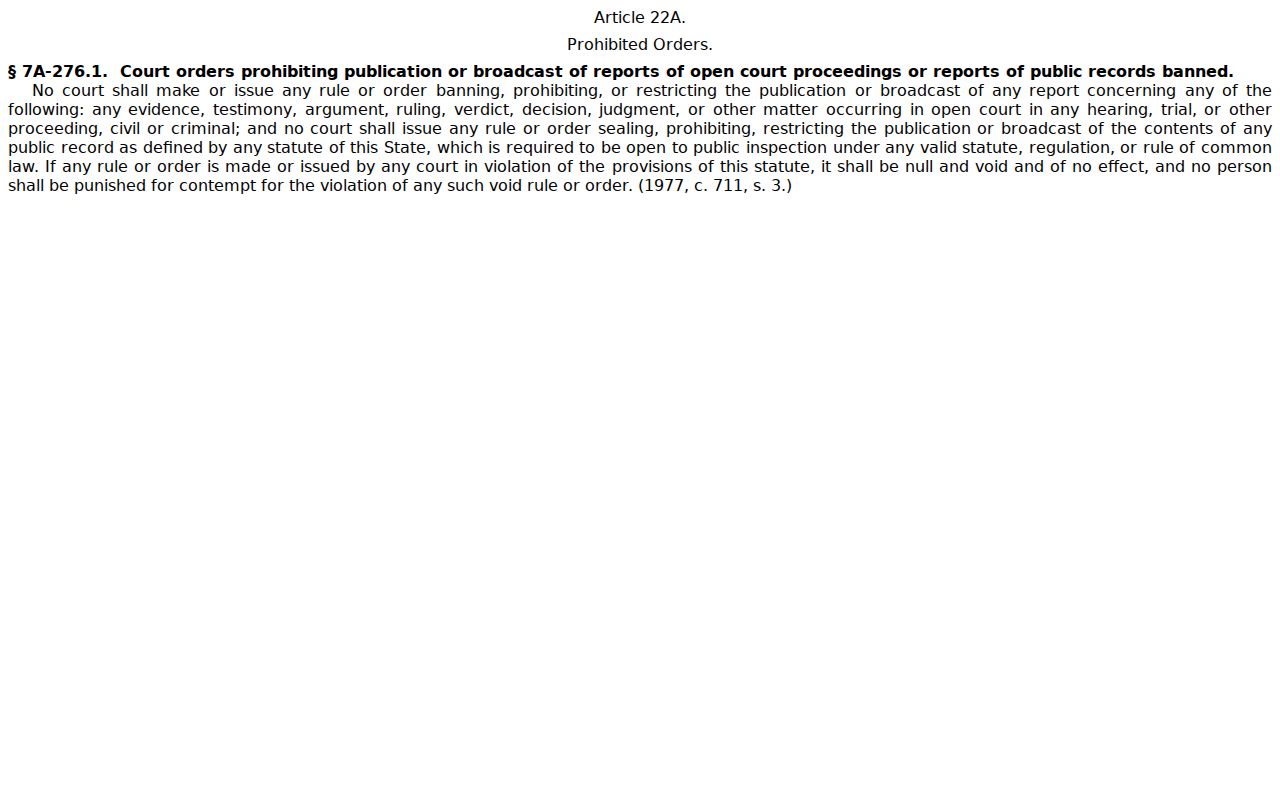
That statute still leaves limits in place. Any Franklin County public record has to be read with the applicable access rules and clerk procedures.
Franklin County NCAOC Request Boundary
The state's public-record request route does not reach Franklin County case documents. NCAOC is not the custodian for court documents, case information, marriage records, or birth records. That boundary comes straight from the state. A Franklin County filed court document belongs with the local clerk. It does not belong with a state administrative form. The Judicial Branch public-records request page lays out that boundary.
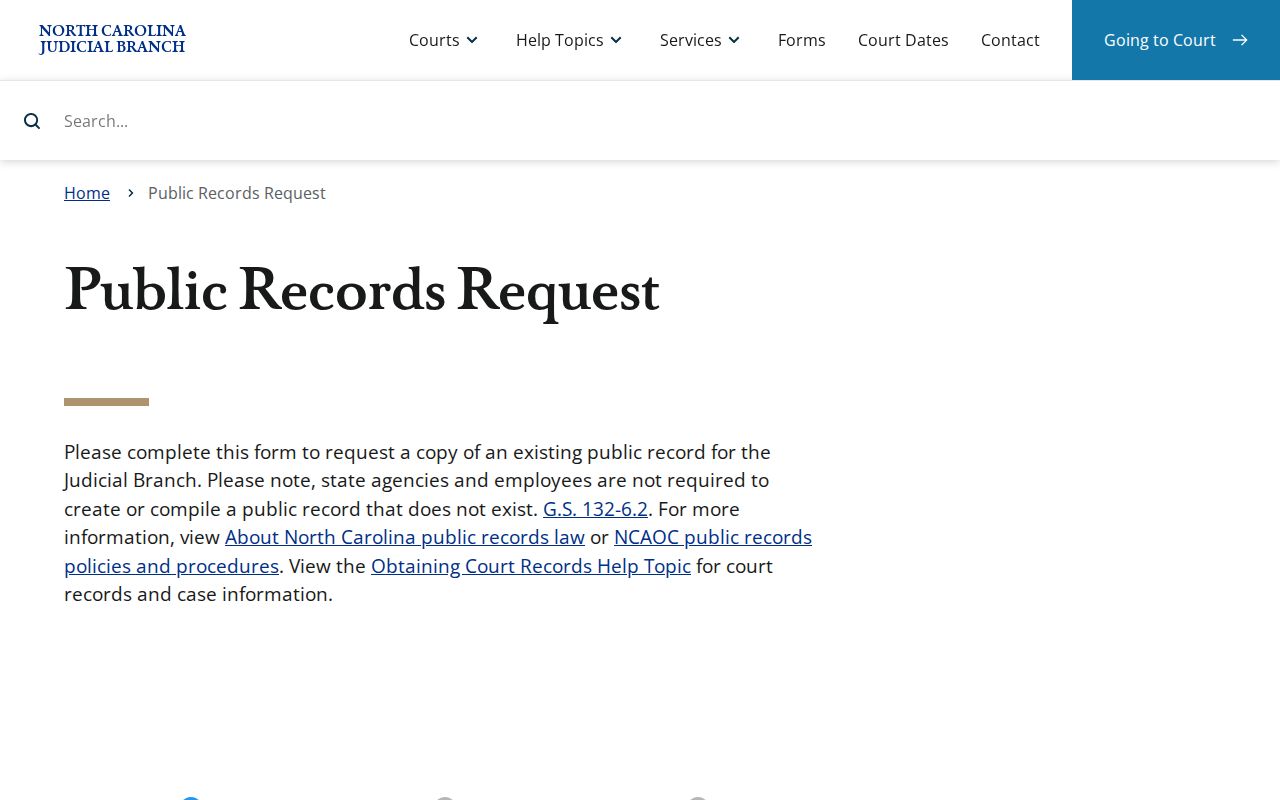
The form has a real use: NCAOC administrative records. It just cannot replace the Franklin County clerk's case-file custody. The NCAOC public-records policy covers written administrative requests, inspection, copies, fees, and appeals.
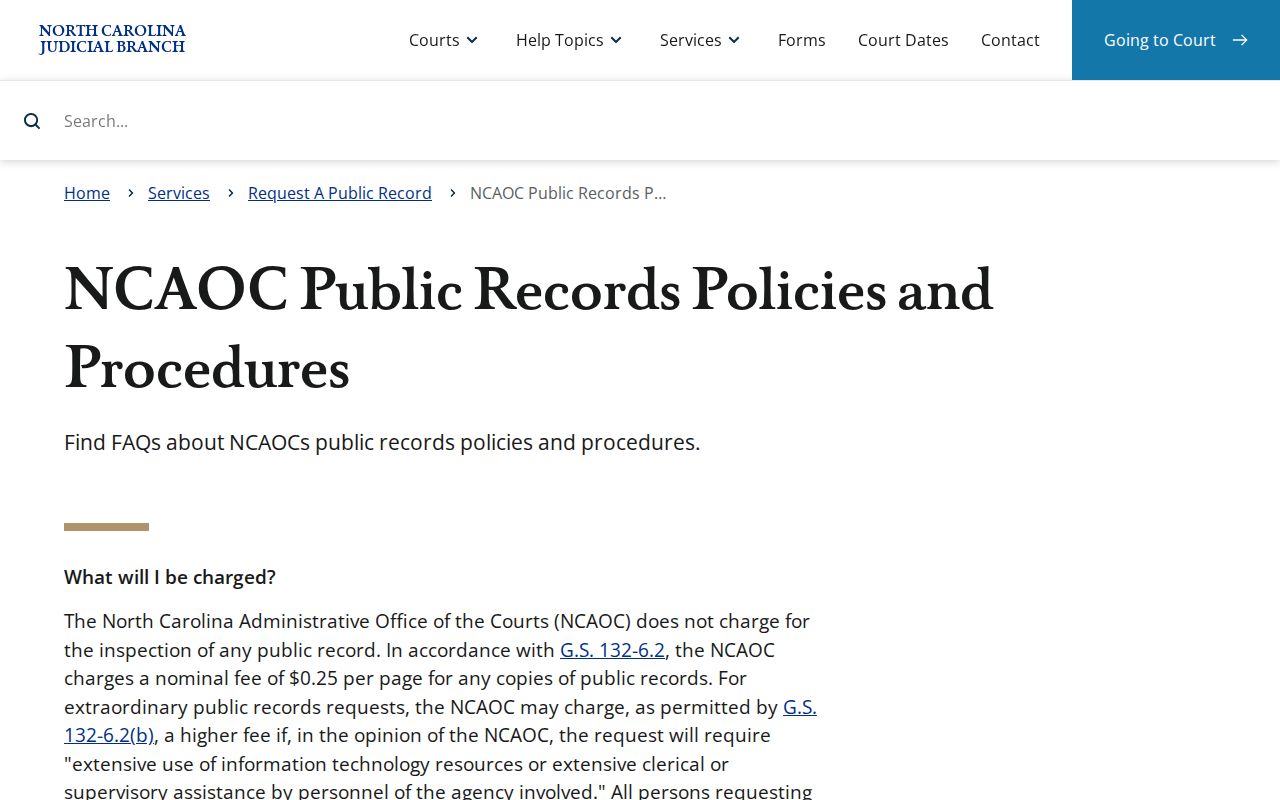
For records NCAOC actually holds, its policy allows inspection without charge, and copies carry its listed terms. Still, NCAOC cannot certify Franklin County case documents.
Franklin County Transcript and Audio
A transcript and an audio recording are not interchangeable Franklin County court records. Court reporters set their own charges for transcripts. Whether a hearing recording exists at all depends on the proceeding and the access rules. The statewide record instructions send a nonconfidential audio requester to AOC-G-114 through the clerk. Confidential material requires court permission.
So name the record type when you ask: a docket entry, a filed document, a certificate, a transcript, or audio. That tells the clerk who holds it. It also prevents a delayed request. The item may not exist, or it may not be releasable.
Franklin County Record Confirmation
Portal can locate a Franklin County public case and its Register of Actions. Search Hearings and official calendars help with a Franklin County setting. The clerk handles the actual file and public inspection. The clerk also handles copies, certification, and restricted-access questions. Transcripts and recordings go through a court reporter or the clerk audio route. Each piece has its own holder.
Note: North Carolina Court of Appeals records follow a separate appellate route. Franklin County court case records stay at the trial level.