
Bunn Court Docket Searches
Bunn has no city court portal. Start a Bunn court docket search through the county. For any Bunn matter filed in Franklin County, the North Carolina eCourts Portal is the public entry point. It works as a view-only window into public Odyssey data. An exact case number gives the cleanest result. With only a name, follow the required last, first, middle, suffix format. Then add supported location or case criteria.
A Portal result can open the public Register of Actions, sometimes called a Case Summary. It summarizes the docket entries the clerk's record holds. Think of it as a summary, not a certified copy or the full official file. Need a document, a certification, or a public-terminal check on a Bunn court file? The Franklin Clerk of Superior Court handles those requests.
- Read the Bunn citation or notice for county, date, and case information.
- Use the exact case number in Portal when it is available.
- Use the documented name format and Franklin criteria for a Bunn name search.
- Review the public summary and use Search Hearings for a scheduled event.
- Ask the clerk about the available Bunn court-file route.
Bunn Court Records Clerk Route
A Bunn court record with Franklin venue lives in the county state-court system. The Franklin Clerk of Superior Court keeps the court files, dockets, and indexes. These cover Superior and District Court matters. Bunn Town Hall is not a court-file counter. A town web page cannot replace the clerk's record function either. The official Franklin court location shows the current county-court route.
The Town of Bunn site is an official civic source. It helps with local orientation. But a Bunn court question still turns on the case county, the court venue, and the record type. When the cited venue is Franklin County, a Bunn court record is a state record. The town site itself lists no court calendar and no clerk-held case file.
Bunn's town site posts no court calendar or clerk case file.
Inside Bunn Municipal Court
Bunn operates no Municipal Court. It has no local docket, no payment portal, and no town court calendar of its own. North Carolina's statewide trial courts handle Franklin County cases instead. District Court ordinarily takes Franklin-venue misdemeanors and infractions. Superior Court holds felony jurisdiction, and magistrates carry out limited judicial functions. The Franklin clerk provides the county records route for all of it.
Route a Bunn court records search by the court information printed on the citation or notice, not by town identity. An ordinance question may point you to local code text. But a court case sits in its court venue. A Bunn incident report, a police record, a local code item, and a court record are separate things. They never form one combined database.
Bunn court boundary: town records and state-court records are separate, even when the same local event gives rise to both.
Bunn Code and Court Dockets
The Bunn code of ordinances serves a different purpose than a court record search. That material tracks how the town maintains its own rules. That includes a traffic amendment dated August 4, 2024. None of it functions as a Bunn court docket. It is not a way to pay a citation or a court calendar. A code page can point you to the text of a local ordinance. It cannot tell you which court file a Bunn case belongs in, when it is set, or how it was resolved.
The official Bunn code-of-ordinances source is civic background, not a court docket lookup.
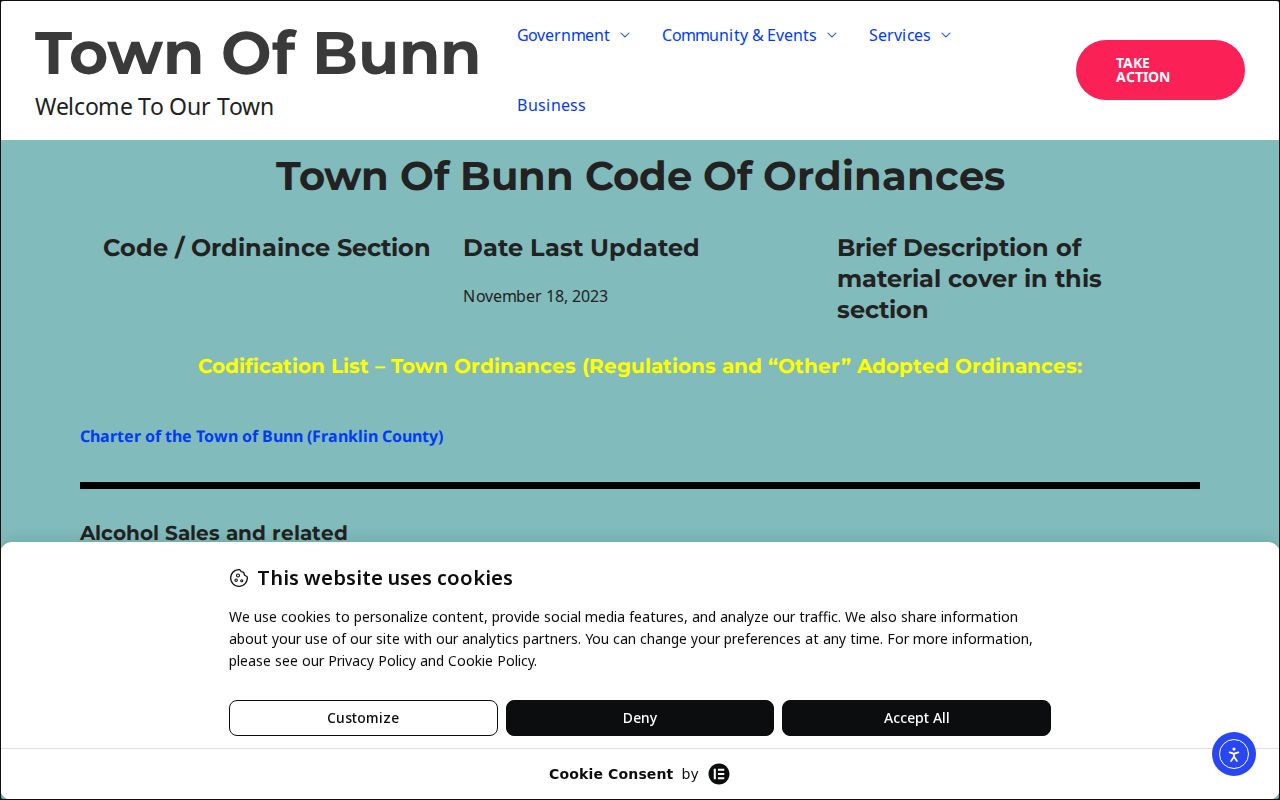
For a true Bunn court record, the citation and the court venue matter far more than any town code page.
Finding Bunn Court Dates
Start with the notice or order when you need to confirm a Bunn court date. That document controls. For a Franklin County case, Portal Search Hearings can help verify the setting. The North Carolina Court Dates route, the local schedules, and the Franklin clerk can also help. The hearing search lets you query by case number, party, business, attorney, or judicial officer. You can also search by courtroom, hearing type, location, or date range. When the Bunn case sits in Franklin County, select Franklin.
One caution applies. A calendar hit is only a scheduled hearing, never a substitute for the notice itself. A reset, a continuance, or a closure can move a Bunn setting. That can happen after the calendar posts. If date information conflicts, the clerk can confirm which court route currently applies.
| Date | The Bunn-related case date from the notice or official hearing result. |
|---|---|
| Time | The stated court time, not a guaranteed duration. |
| Location | The county court location on the current case information. |
| Court | The listed trial division or courtroom. |
| Setting type | The public event label to read with the notice. |
Bunn Police and Court Records
Do not confuse a police contact with a Bunn court-record search. Police material belongs to the agency. The clerk maintains the state court file. A Bunn citation may name the officer or department that issued it. Yet the case itself travels to its venue. Portal can surface available public case information. The clerk handles court-file access, copies, and certification.
The Bunn police-contact source is a local agency contact point, nothing more. Treat it neither as a court calendar nor as a Bunn case docket.
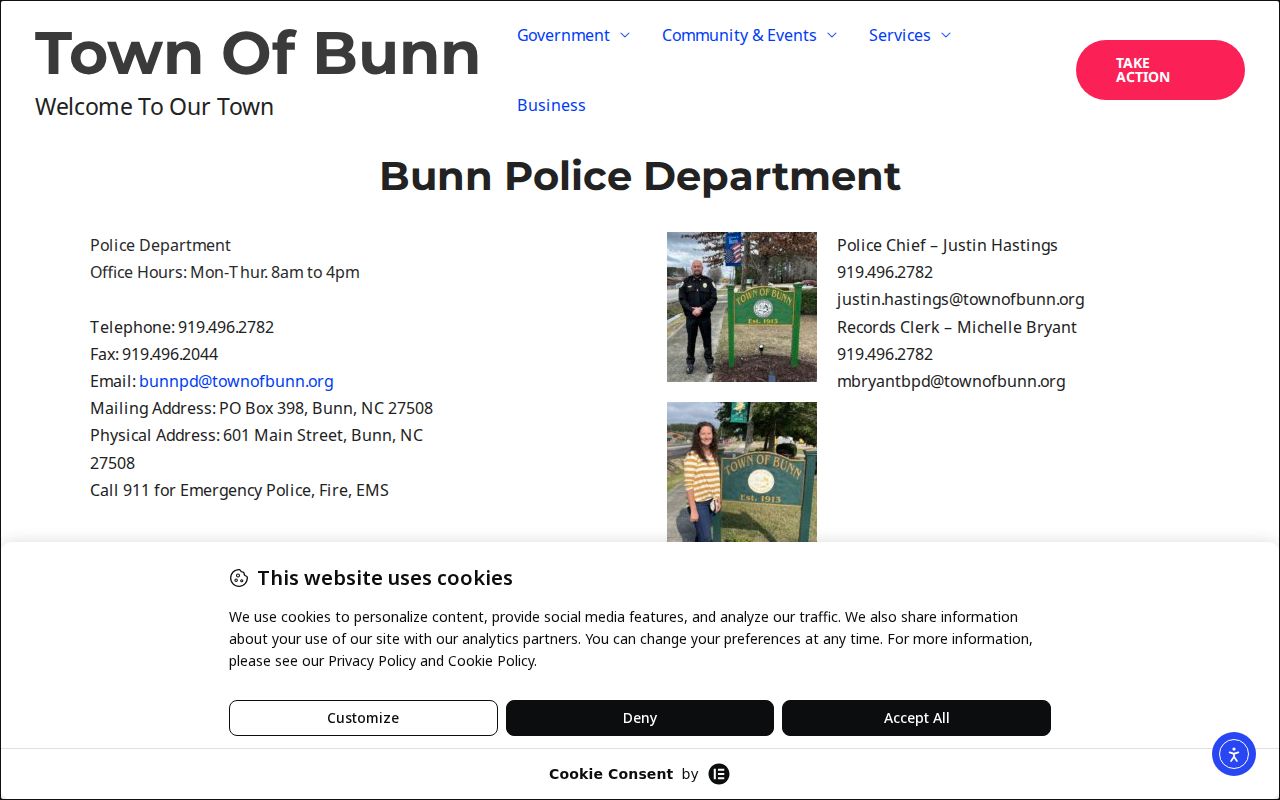
For a Bunn court records search, the town's police can steer a local request, though the case file itself belongs with the proper state court.
Bunn Traffic Ticket Lookups
Bunn traffic tickets never land in a dedicated Bunn traffic court. A state-law citation written with Franklin County venue is normally handled by Franklin District Court. To find the right public route, start with the ticket. Pull the county off the ticket. Pull the citation number too. The case details and the court date belong on it as well. The Portal's Advanced Search lists Citation Number as a search type. The Portal also offers Smart Search, Search Hearings, and Make Payments.
Paying makes sense only if your Bunn citation is eligible. A payment can resolve an eligible waiver, nothing more. It won't change the charge. It won't contest the ticket or buy you a new court date. For county-specific payment options, the current Franklin payment information is the source that matters for a Bunn Franklin-venue ticket.
Bunn Court Calendar Check
Always verify the Bunn court calendar before you travel. Start with the current notice or order. Portal Search Hearings offers a second check. It covers public scheduling data. The Franklin administrative schedules page gathers local schedule sources in one place. The clerk can settle any closure or counter question.
A Bunn case status is not the same thing as a Bunn court date. A public summary may show activity or an outcome label. A hearing search lists what is scheduled, and a printed schedule simply organizes a session. Compare each of these against the current Bunn notice rather than treating them as interchangeable.
- Case Summary
- A public RoA summary, not the official court file.
- Setting
- The scheduled court event identified by current case information.
- Public terminal
- Clerk-office self-service access to available public court records.
How Bunn Cases Reach the County
Venue and case category decide how Bunn cases reach Franklin County courts. Infractions and misdemeanors charged with Franklin venue ordinarily begin in District Court. Felonies fall within Superior Court's original jurisdiction. Civil, domestic, estate, special-proceeding, and small-claim records each use their own state-court categories. For any Bunn case in the county, the Franklin clerk remains the practical records desk.
Docket flow: Bunn agency or citation › Franklin District Court or magistrate route › Franklin Superior Court when the case requires it › Franklin Clerk of Superior Court record.
Even when a Bunn case began with a town agency, the custody of its court records never changes. The county-level Docket Search opens the broader Franklin case-search route.
Bunn Court Copies and Fees
When you request Bunn court records for a Franklin case, say exactly what you want: inspection, an ordinary copy, a certified copy, exemplification, a criminal-record search, transcript information, or audio guidance if available. Give the clerk the case county. Add the case type, the case number if you have it, the party name in the court's format, and the precise item needed. The clerk can then quote your actual Bunn file request. It can also point to the available public route.
The fee baseline sits in G.S. 7A-308. It lists $2 for the first prepared page. Each additional page costs $0.25. The statute also sets $3 for a certificate under seal, $10 for an exemplification, $25 for a criminal-record search, and $30 for a motion to access a court record. More than one line can apply to a single Bunn request.
Who Can See Bunn Court Records
North Carolina public-access rules govern Bunn court records held in Franklin files. Court restrictions apply too. The clerk keeps the files, dockets, and indexes open for inspection during regular hours unless the law blocks access. Portal can supply some public Bunn case information. Still, it is no substitute for the official file, and plenty of documents never appear online.
Key Rules:
G.S. 7A-109 covers clerk-maintained files, dockets, indexes, and conditional inspection.
G.S. 132-6 addresses prompt public inspection and copies.
G.S. 1-72.1 supplies a civil access and sealing procedure.
Some Bunn court records are sealed, confidential, juvenile-related, expunged, or otherwise restricted. A missing online result proves nothing about the case's history.
Bunn Court Records Civic Guide
Bunn court records answer different questions depending on what you actually need. A county activity report cannot tell you how many Bunn cases are live today. It cannot explain one person's case either. For real answers, three tools matter. Portal covers public case information. The hearing and calendar tools handle dates. The clerk of court handles anything at the file level. Each one does a job the others cannot.
Before you head to court, pull out the case notice. Confirm the date, the building, and what kind of record you want. The Franklin contact directory lists the right office for each court function. At the counter, ask the clerk about the public terminal or the file desk. Do not assume some Bunn town office keeps the court file. It does not.
What you can get also depends on the item. A case summary, a filed motion, a judgment, a certified copy, a court-reporter transcript, and an audio recording are separate products. Each has separate rules. Court reporters charge their own transcript fees. Recordings run through a different clerk and state form process. Confidential material may need a judge's permission. Name the exact record you want at the counter. A vague request cannot match the right file or service.
Some records sit with the state Administrative Office of the Courts instead. That office handles administrative records through its own public-records request process. It does not hold county case documents. It does not hold marriage records or case information either. A question about a local court file belongs with the clerk in the county where the case lives. Knowing this distinction saves your request from being sent to an office that cannot help.
Refine your docket search when results get messy. Use a case number when you have one. Use the documented party-name order, the right county, and the Portal filters the record facts support. A search that returns the 200-result display limit is telling you to narrow the criteria. It does not mean the records stop there. Filters for location, case type, or status help when the known facts support them. Whatever comes back, treat it as public case information rather than a certified record.
Statewide guidance keeps requests, payments, calendars, and appeals in separate lanes. Paying a fee does not certify the docket. Looking up a court date does not hand you the filed document. An appellate status listing is not the whole appellate record. Keep those paths straight. Ask the correct Franklin office your question. Use each source only for its real job.
For a current Bunn setting, put the case notice beside Search Hearings and the county schedule. Each source has its own purpose. The clerk can confirm the file route or answer a closure question. A town code amendment, meanwhile, cannot fix the date, courtroom, or outcome of a state-court case.
Note: A current court notice always controls. It beats a dated calendar, a town source, or an older Portal result.